Aging Is Measurable

Most people
never track
this. You can.

We measure 51 data points, including muscle mass, muscle wasting, and visceral fat. You leave with a dated record of your biological condition. These are the numbers behind how you feel and how you look, and how both change as you age.

51
Data Points
Your biological
condition, dated.
1
Visit
Quick, simple,
non invasive.
Know Your Numbers Day participants holding their records
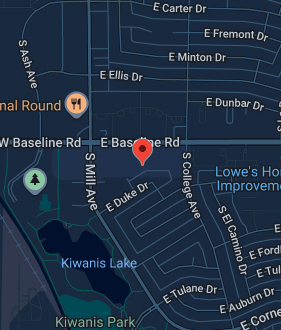
In Balance Body, 209 E Baseline Rd, Tempe
Outside

This is the building.

The office at 209 E Baseline Rd Ste E208, Tempe
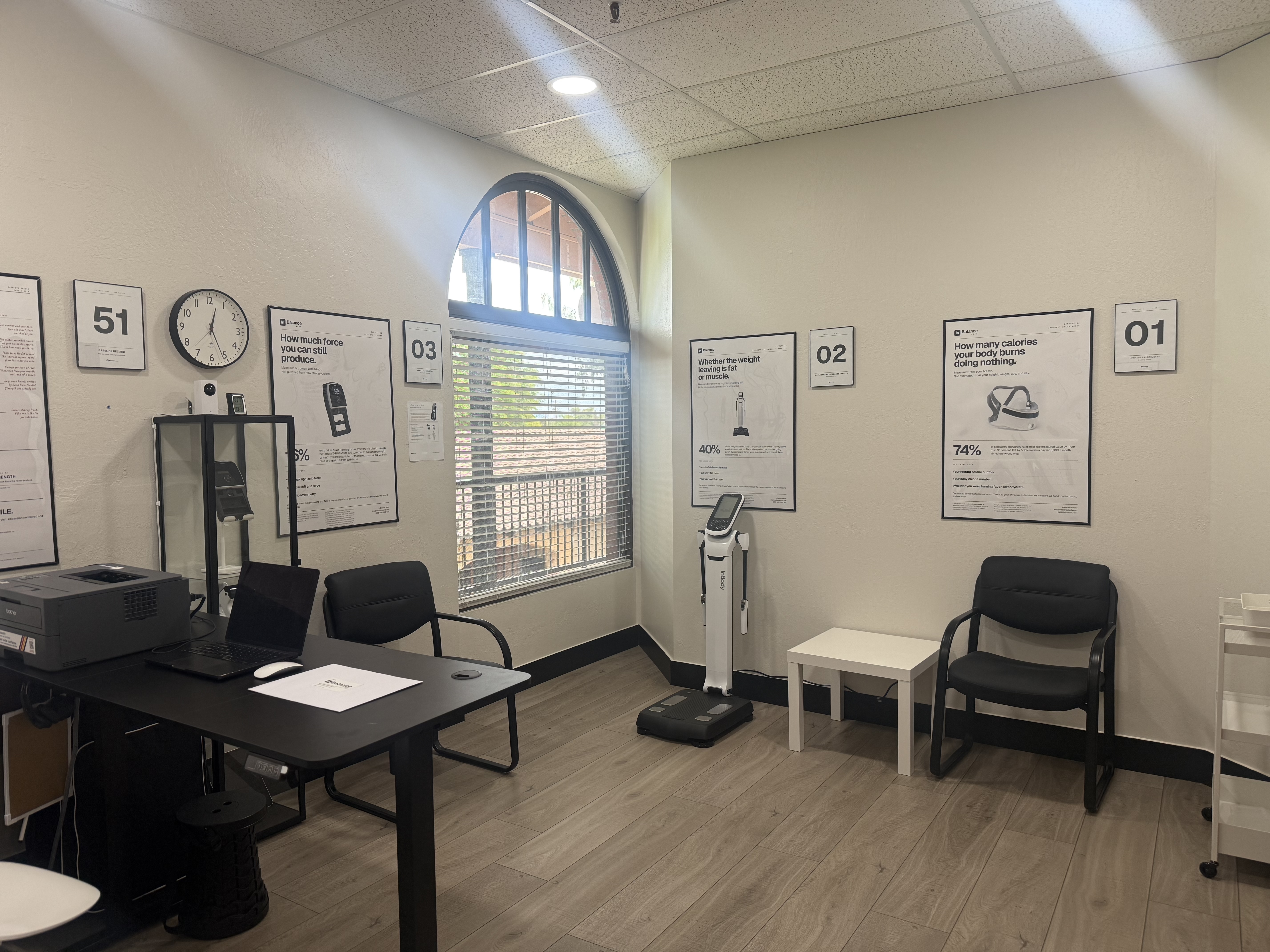
Inside

This is the office.

Map showing 209 E Baseline Rd Ste E208, Tempe
Location

209 E Baseline Rd  #E208
Tempe, AZ 85283

Who This Is For

Aging or Losing Weight

Using GLP 1 medications or peptides, or simply concerned about maintaining muscle as you age.

What You Learn

Fat or Muscle?

51 data points on one dated record of your biological condition, so you can see what is actually changing.

Get Your Baseline

Know Your
Numbers Day

Book Your Visit
inbalancebody.com
In Balance BODY

Three methods, taken in sequence in one visit, produce 51 data points on a single record of your biological condition. The record carries an accession number and a date, and it is handed to the person before they leave.

Company

Supporting Literature

Standardized measurement conditions
  1. Kyle UG, Bosaeus I, De Lorenzo AD, et al. Bioelectrical impedance analysis, part II: utilization in clinical practice. ESPEN guidelines. Clinical Nutrition, vol. 23, no. 6 (December 2004): 1430–1453. doi:10.1016/j.clnu.2004.09.012
  2. Kyle UG, Bosaeus I, De Lorenzo AD, et al. Bioelectrical impedance analysis, part I: review of principles and methods. ESPEN guidelines. Clinical Nutrition, vol. 23, no. 5 (October 2004): 1226–1243. PMID 15380917
Why conditions are fixed before measurement
  1. Slinde F, Rossander-Hulthén L. Bioelectrical impedance: effect of 3 identical meals on diurnal impedance variation and calculation of body composition. American Journal of Clinical Nutrition, vol. 74, no. 4 (October 2001): 474–478. doi:10.1093/ajcn/74.4.474
Why grip strength is measured
  1. Leong DP, Teo KK, Rangarajan S, et al. Prognostic value of grip strength: findings from the Prospective Urban Rural Epidemiology (PURE) study. The Lancet, vol. 386, no. 9990 (July 18, 2015): 266–273. doi:10.1016/S0140-6736(14)62000-6

In Balance Body is a body composition office and the measurement layer inside personalized care. We produce a dated record of your biological condition and hand it over. We do not diagnose, interpret, or treat, and we do not calculate a biological age. The record is handed to the person, who keeps it and takes it to their prescriber.

© 2026 In Balance Body. All rights reserved.

209 E Baseline Rd Ste E208, Tempe, AZ 85283